

Corporate social responsibility is strongest when employees can take meaningful action, nonprofit partners receive useful support, and the company can explain what changed. The best programs connect a clear community need with practical participation and honest measurement.
The most useful corporate social responsibility examples combine employee involvement, a trusted local nonprofit, a defined contribution, and a way to review progress. They may include giving, matching gifts, volunteering, skills-based support, sponsorship, or a cause-aligned team event.
Explore corporate sponsorship and partnership options with Bike to the Beach
A program does not need to be large to be credible. It needs to be useful to the partner, accessible to employees, and specific enough to show where time, money, and effort went.
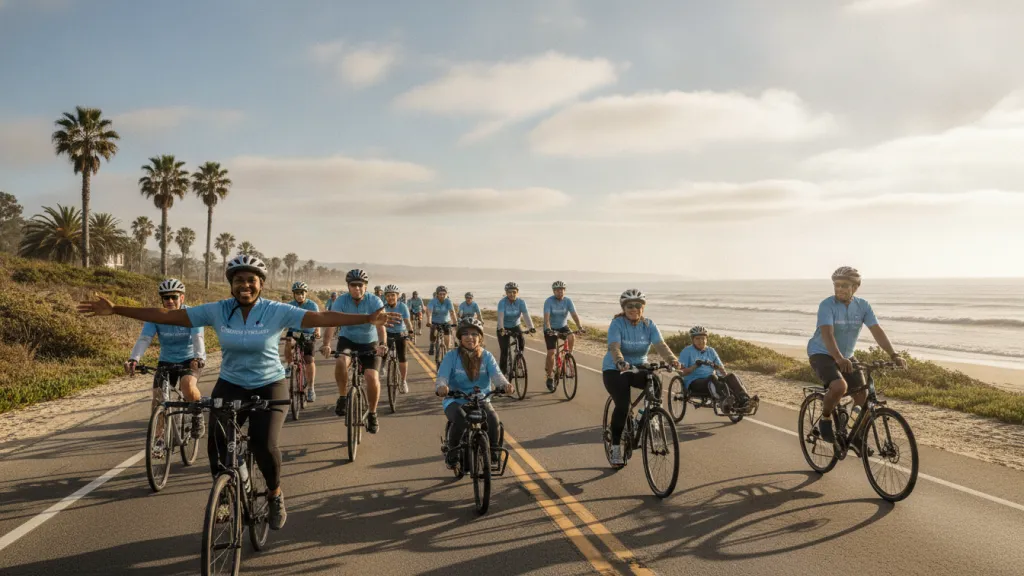
Bike to the Beach offers a regional example. Its supported charity rides connect cycling, fundraising, volunteers, sponsors, and local autism and disability organizations. That model gives companies several ways to participate without making athletic ability the only measure of involvement.
What makes corporate social responsibility examples credible?
Credible CSR begins with a community-defined need. The company then chooses an action that matches its resources and the partner’s capacity. This sequence matters because the most visible activity is not always the most useful one.
A strong program answers five basic questions:
- What need is being addressed? Name the community, issue, or service area.
- Who helps define the work? Give the nonprofit partner a meaningful role in planning.
- How can people participate? Offer more than one role for employees and supporters.
- What will the company provide? Clarify money, time, skills, equipment, promotion, or event support.
- How will progress be reviewed? Track activity and partner-defined results without overclaiming.
Credibility also depends on boundaries. A company should not claim that one volunteer day solved a complex community issue. It can accurately report participation, funds raised, volunteer hours, completed work, and partner feedback.
Use plain language when reporting results. Explain what the company did, what the nonprofit received, and what remains unknown. This approach respects the community and gives employees a more accurate understanding of their contribution.
Start with partnership, not promotion
Companies sometimes begin with a campaign idea and search for a nonprofit afterward. A better process starts with listening. Ask the partner what support is needed, what timing works, and what participation would create extra work.
The partner may prefer unrestricted funding, recurring volunteers, event logistics, professional skills, or help reaching a new audience. The answer should shape the program. A polished activity is not a success if staff must spend more time managing it than using the support.
Build accountability into the commitment
Accountability can be simple. Agree on the purpose, contribution, timeline, point of contact, and review method. Record the commitments before the program begins.
At the end of the agreed period, ask what was delivered and what the partner learned. Then decide whether to continue, adjust, or end the effort. A willingness to change is a strength, not a sign that the first plan failed.
How can employee-led giving follow local priorities?
Employee-led giving gives workers a voice in where company resources go. It can be organized through a regional office, employee resource group, community committee, or rotating team of volunteers.
The company can establish a simple framework. Employees identify a local issue, research credible organizations, and bring a recommendation to the appropriate decision-maker. The company then provides a grant, match, paid service time, or communications support.
This model works best when employees have guidance. Provide basic eligibility standards for nonprofit partners. Explain how conflicts of interest are handled. Make the timeline and decision process clear.
Employee input should complement nonprofit expertise. Employees may care deeply about an issue, but the partner understands local needs, program capacity, and responsible implementation. A shared decision process respects both perspectives.
Employee-led giving can also improve participation. People are more likely to engage when they understand why a cause matters and how the company selected it. That context creates a stronger connection than a list of approved organizations with no local story.
Offer several forms of contribution
Giving should not be limited to personal donations. Employees can contribute through fundraising, mentoring, event support, communications, translation, planning, or professional skills.
A flexible menu supports people with different schedules, abilities, interests, and financial circumstances. It also helps the nonprofit receive support from a wider range of employee strengths.
Participation must remain voluntary. Managers should not imply that employees must donate or join an event to be viewed as committed. A respectful program makes room for different levels of involvement.

How do matching gifts and sponsorship expand participation?
Matching gifts can extend employee giving while sponsorship can provide predictable support for a nonprofit or event. Used together, they create several entry points for employees and a clearer planning base for partners.
A company might invite employees to support a charity ride, match eligible fundraising, and sponsor an event element. One employee may ride. Another may volunteer. A third may coordinate communications or help teammates meet a fundraising goal.
The value is not only financial. Multiple roles make participation more inclusive. They also reduce the pressure to treat one event activity as the entire CSR program.
| Approach | Best fit | Employee role | Useful first measure |
|---|---|---|---|
| Employee giving | Teams building a shared connection to a local cause | Donate or fundraise | Participating employees and dollars raised |
| Matching gifts | Companies with a formal giving process | Submit eligible gifts | Gifts submitted and matched |
| Sponsorship | Companies seeking planned community support | Support partner or event priorities | Commitment and agreed deliverables |
| Team participation | Workplaces seeking shared action | Ride, volunteer, recruit, or support logistics | Participants, hours, and funds raised |
Set expectations before the campaign starts. Define what the company will provide, what the partner needs, and how matching or sponsorship support will be documented.
Do not describe a match as impact until eligible gifts are processed and distributed. Report commitments separately from completed contributions. This distinction keeps internal updates accurate.
Bike to the Beach gives companies a practical regional model. Corporate groups can ride together, volunteer at rest stops, support fundraising, or sponsor the event. Teams can choose the combination that fits their employees and community goals.
Companies can review volunteer opportunities for employees and corporate groups and compare them with their broader sponsorship plan.
What does skills-based volunteering look like in practice?
Skills-based volunteering uses employee expertise to address one defined nonprofit need. It can be valuable when the partner has a clear project and enough capacity to guide the work.
Possible projects include improving a donor process, organizing data, reviewing communications, translating materials, planning an event, or creating a volunteer onboarding guide. The project should match an actual need. Employees should not invent work simply because they have a particular skill.
Before beginning, create a short project brief. Include the problem, desired result, people involved, time available, information that can be shared, and follow-up owner.
- Ask the nonprofit to identify a specific challenge.
- Confirm that the company team has the right skills and time.
- Agree on a practical deliverable and review point.
- Complete the work with the nonprofit’s input.
- Transfer ownership and record what happens next.
The final step is important. A tool is useful only if nonprofit staff can maintain it after the volunteer engagement ends. The company should not create a system that depends on unpaid follow-up from the same employees.
Measure the result in terms the partner understands. Did the organization receive a usable asset? Did the work reduce a burden? Can staff apply it without additional company support? These questions are more useful than hours alone.
Why is a cause-aligned team event a useful CSR example?
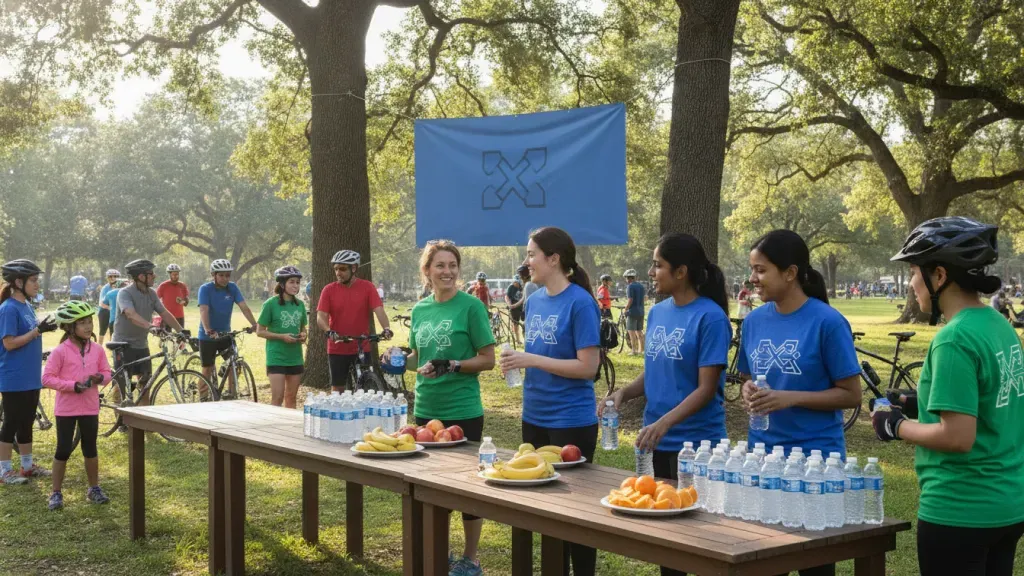
A team event can turn a CSR plan into shared action. It gives employees a common experience while creating opportunities for fundraising, volunteering, sponsorship, and community learning.
The event should support a broader relationship. It should not be the only interaction between the company and the nonprofit. A ride can be paired with a matching campaign, a volunteer shift, an employee education session, or a follow-up conversation with the partner.
Bike to the Beach combines supported charity rides with fundraising and awareness for local autism and disability organizations. Companies can participate through regional teams, volunteer roles, sponsorship, or behind-the-scenes support.
This structure helps companies include different types of employees. Riders can train and fundraise. Volunteers can support event operations. Other employees can handle communications, recruitment, logistics, or encouragement.
- Explain the physical demands of riding and volunteer roles.
- Offer non-riding roles with equal respect and visibility.
- Give employees clear information before they commit.
- Connect fundraising to a local partner and defined purpose.
- Plan a post-event review with the company and nonprofit.
A cause-aligned event is strongest when the community purpose remains visible before, during, and after the activity. Teams should be able to explain who the partnership supports and how their participation contributes.
Learn more about Bike to the Beach’s community-first model and explore regional charity ride opportunities.
How should companies measure CSR impact?
Measurement should separate activity from outcome. Participation and dollars show what a company contributed. Partner feedback and community results help explain what that contribution made possible.
A balanced review can include these categories:
- Participation: employees involved, roles completed, volunteer hours, and repeat participation.
- Resources: gifts, matches, sponsorship support, supplies, and skills delivered.
- Partner value: completed projects, additional service capacity, funds available, or a stated need addressed.
- Inclusion: accessible roles, participation across teams, and feedback from people unable to attend in person.
- Learning: what should continue, change, expand, or stop.
Use a short partner survey or results conversation. Ask what support was useful, what created friction, and what the partner would recommend next time.
Do not force every program into the same measurement template. A fundraising campaign may focus on dollars distributed and partner feedback. A skills project may focus on a completed tool and staff adoption.
Bike to the Beach tracks measures such as dollars raised and distributed, partner organizations, regional goals, participant fundraising, testimonials, case studies, and partner feedback. Companies can use the same principle without claiming outcomes they cannot verify.
Report historical results separately from future goals. A goal is a plan. It is not a completed outcome. Clear labels help employees and partners trust the report.
What mistakes weaken a corporate social responsibility program?
Even well-intentioned programs can lose value when they prioritize appearance over usefulness. Most problems can be prevented through early planning and honest partner communication.
- Starting with the marketing story: Begin with the community need and partner relationship.
- Offering only one type of participation: Include giving, volunteering, skills, fundraising, and support roles.
- Using a nonprofit as a backdrop: Confirm consent for names, images, and stories.
- Counting activity as impact: Pair participation data with partner-defined results.
- Making a short campaign sound permanent: State the actual commitment and timeline.
- Ignoring accessibility: Ask what different employees need to participate.
- Overpromising outcomes: Report what is known and identify what still needs evidence.
It is also reasonable to change course. A partner’s needs may shift. An activity may create more administrative work than expected. A company may learn that another contribution would be more useful.
Accountability means listening, adjusting, and keeping commitments realistic. That process creates stronger relationships than a campaign that looks polished but does not respond to the community.
Build a corporate partnership that gives your team a practical way to support local nonprofit impact
Frequently asked questions
What is an example of corporate social responsibility?
A company can give employees paid time to volunteer, match employee donations, provide professional skills, sponsor a local program, or organize a cause-aligned team event. The activity is most credible when a nonprofit partner helps define the need and the company reports the contribution accurately.
What are the four types of corporate social responsibility?
CSR is often described through environmental, ethical, philanthropic, and economic responsibilities. A single program can include more than one type. A local charity ride, for example, may combine philanthropy, ethical partnership, employee engagement, and responsible community investment.
How can a small company start a CSR program?
Start with one local nonprofit and one clearly defined need. Ask what support would help, offer two or three participation options, set a realistic commitment, and agree on one result to review. A focused pilot creates useful learning before expansion.
How do companies measure CSR success?
Measure employee participation, volunteer hours, funds contributed, matched gifts, completed projects, partner feedback, and relevant community outcomes. Keep activity data separate from outcomes, and explain which results are historical, current, or future goals.
Why do local nonprofit partnerships matter in CSR?
Local nonprofit partners understand the community, the people involved, and the support that is most useful. Their guidance helps a company avoid a generic campaign and direct resources toward needs that matter locally.
How can employees participate if they cannot attend an event?
Offer options such as donating, using a company match, fundraising, mentoring, handling logistics, writing communications, volunteering remotely, or supporting participants. Flexible roles make the program more inclusive and broaden the skills available to the nonprofit partner.
Ready to build a community-centered CSR partnership?
A thoughtful partnership can give employees a practical way to support local nonprofit priorities while creating a shared experience. Explore corporate sponsorship and partnership options with Bike to the Beach to start a conversation about your team and community goals.